
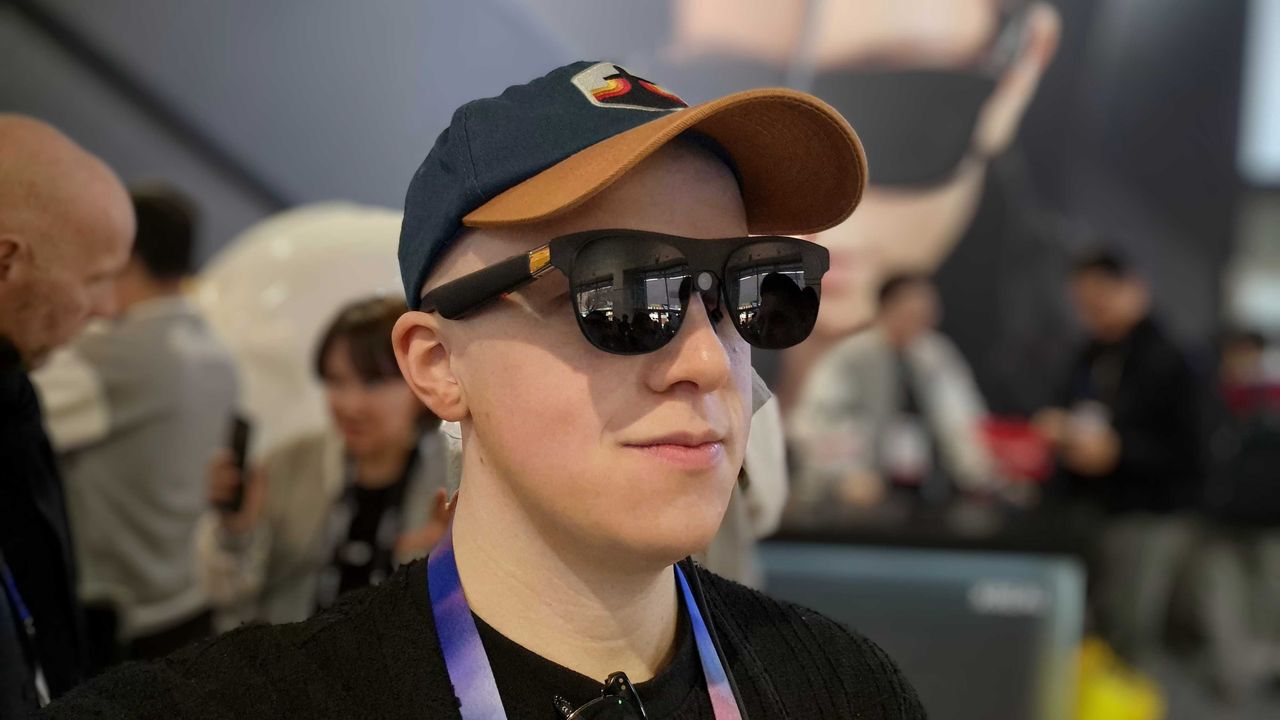
Xreal just launched what might possibly be its best update yet for its smart glasses, as you can now turn any 2D content into 3D. I’ve been giving it a try, and the effect is incredible, albeit still something of a work in progress at times.
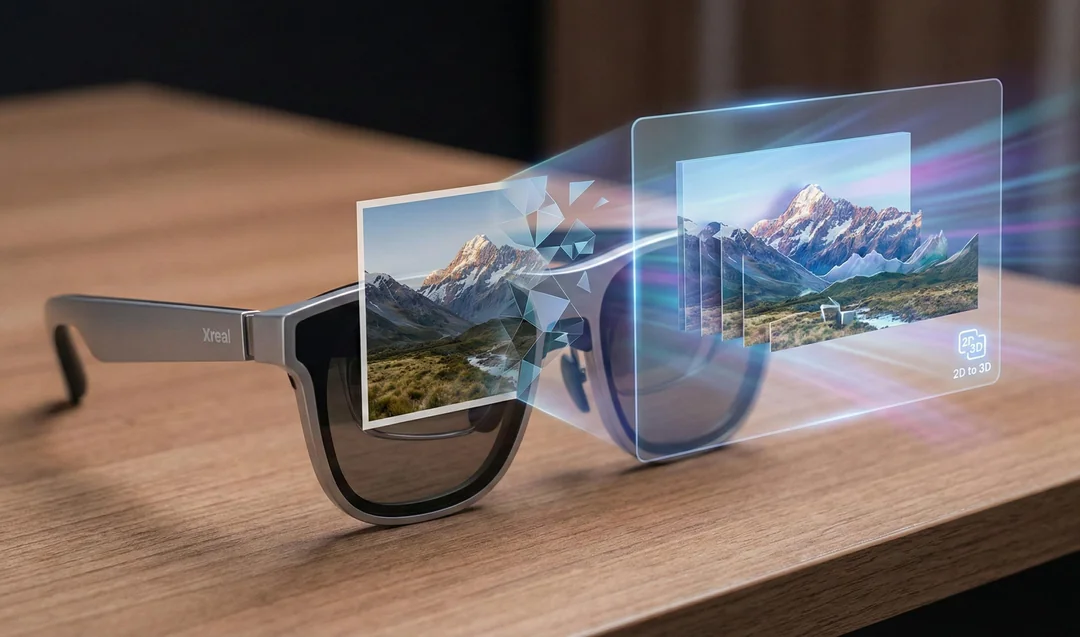
The XR glasses are now able to do this via a tech Xreal calls Real 3D. It first debuted on the Xreal 1S glasses and has since landed on Xreal’s One and One Pro specs, too, thanks to an update.
Once switched on, the glasses will create depth in previously flat videos and games. Best of all, it works on any app and with any system, as it’s not handled by your phone, laptop, or console – Xreal’s specs handle all the 3D processing for you.
Starting with my phone before I even booted up any apps, I could see Real 3D in effect, as it turned my phone background – a picture I took of my fiancée in Pompeii – had a stereoscopic effect, as did my app icons, which were now floating above the page.
Actually moving into video, I tried both some animated projects – Eyes of Wakanda and Phineas and Ferb – as well as some live-action stuff – Rogue One and a YouTuber streamer’s latest VoD.
2D Animation is where the tech really shines. The better-defined edges of objects seemingly help the software distinguish items from one another better, whereas Rogue One occasionally had distortion around the edges of objects, and some layers blended incorrectly.
Eyes of Wakanda, with its more complex 3D animated style, slanted in between. Mostly great, but sometimes there would be noticeable errors in the glasses’ rendering. Regardless, I generally found Real 3D to be impressive, and I’ll definitely try to use it.
You can tweak the strength of the stereoscopic effect in the glasses’ settings. You can reduce the errors at the cost of 3D effect strength, or make the effect much stronger at the risk of it having a bit more trouble in more complex scenes.

With my video tests done, I switched over to my Asus ROG Xbox Ally X to boot up Sekiro and The Binding of Isaac. Much like with the shows, Isaac’s simpler 2D style was easier to get a great 3D effect from, whereas Sekiro could struggle at times.
Sekiro’s troubles were also impacted by some noticeable performance dips – such as a lower framerate and a subtle lag – that did make executing its more precise gameplay a little more challenging.
Exactly what XR needs
All this is to say that Real 3D is a very impressive tool, if still a work in progress, as my colleague Lance Ulanoff found it to be when trying the Xreal 1S specs. Despite its occasional slip-ups, I still loved using it, and I’m excited to see how Xreal evolves this tech over time.
I remember chatting with its team at an event a couple of years ago, where we bemoaned the lack of accessible 3D content for XR hardware. At the time, outside of Disney Plus on the Apple Vision Pro, you couldn’t simply buy or rent a 3D flick.
As another attendee in our conversation noted, the quiet part is that if you want 3D content for your glasses, you’d need to sail the seven seas.
This is obviously not ideal, especially for a medium like XR, which is well-positioned to leverage stereoscopic content. So I am so excited that Xreal has taken such an initiative with Real 3D and decided to forcibly drag 3D content to its platform while content makers drag their heels.
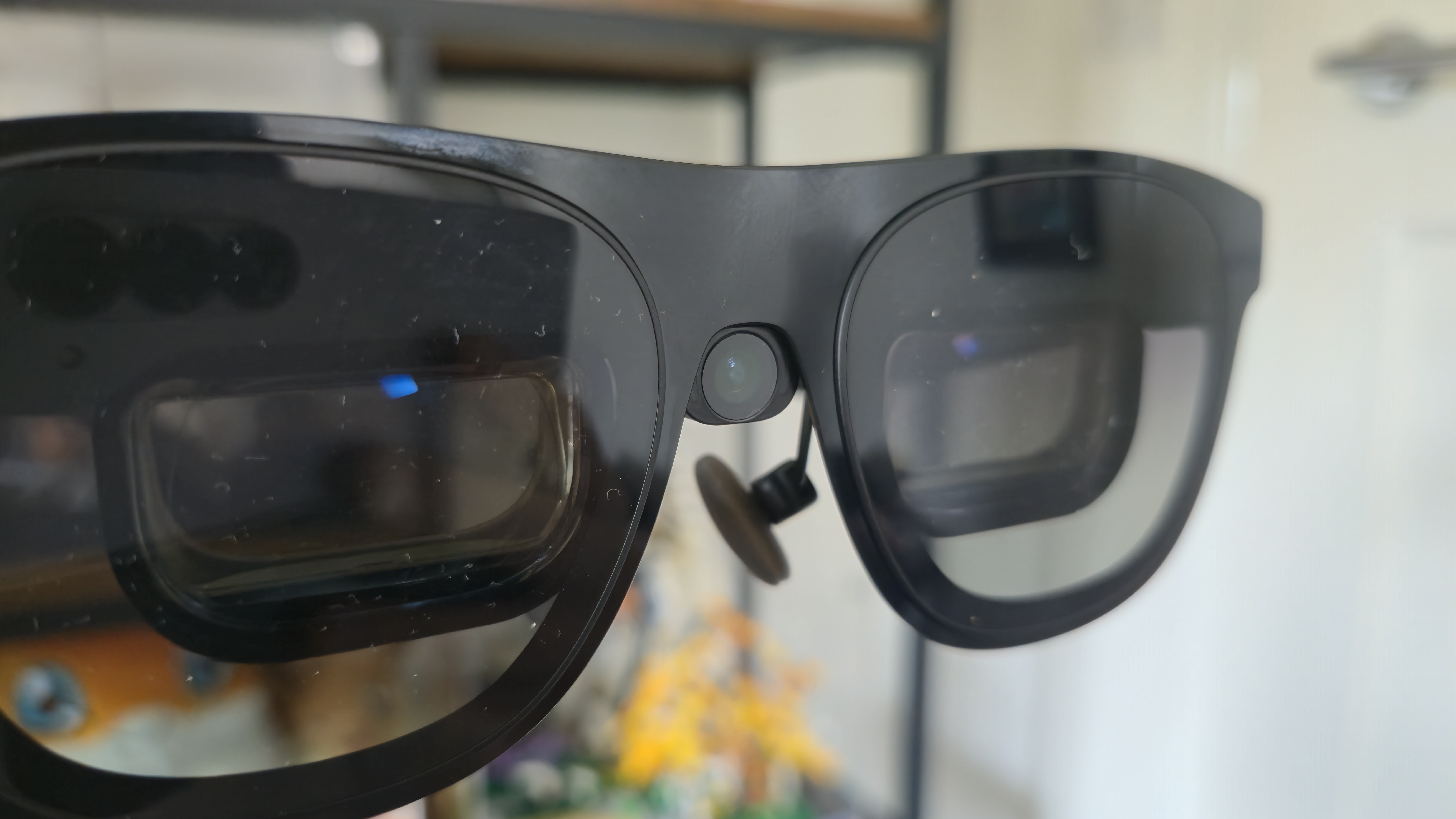
It’s definitely another arrow in the Xreal glasses’ already full quiver, and over time I'm sure Real 3D will only get better. The ball’s also now in the court of its rivals. Viture has something similar to Real 3D but it requires an on-device app, while many other glasses have no equivalent.
How to experience Real 3D
If you want to try Real 3D for yourself, you’ll need a pair of Xreal One, Xreal One Pro, or Xreal 1S glasses.
They’ll also need to be running the latest firmware. The easiest way to fix this is to head to Xreal’s Update Page on your PC, connect your glasses to your PC using their USB-C cable, and follow the onscreen prompts to install the update.
Once installed, connect your glasses to a compatible device and open up the glasses’ settings menu by double-tapping the red button on your frames. In the display settings, select Real 3D, and have fun with the new tool.
By returning to the settings, you can turn Real 3D off, but you can also turn it off by unplugging your glasses and reconnecting them to your device. Additionally, you can adjust the strength of the 3D effects.
Follow TechRadar on Google News and add us as a preferred source to get our expert news, reviews, and opinion in your feeds. Make sure to click the Follow button!
And of course, you can also follow TechRadar on YouTube and TikTok for news, reviews, unboxings in video form, and get regular updates from us on WhatsApp too.
Source: TechRadar