
A mere eight months ago, Dyson announced an ultra-innovative new vacuum cleaner. It was called the PencilVac, and the USP was that all of its major components, from its motor to its battery to its dust cup, had been shrunk down to fit into its broom-shaped handle.
The design was – I was informed – the result of much meticulous work from the Dyson, and required the engineers to create a teeny-tiny new motor. It would be worth it though: there was nothing else remotely like it.
Except now, there is. The PencilVac went on sale in the UK in December 2025 (it launched a little earlier in Australia and is yet to become available in the US), and in January 2026 I saw my first PencilVac dupe at CES. It's just at prototype stage at the moment, but there are a number of features that could be causing Dyson some concern.
I'm in the middle of testing the Dyson PencilVac (full review to go live when the embargo lifts in early February) and I'm impressed so far. Now, Narwal's version is clearly not finalized yet – it doesn't yet have a name, there's very minimal information available, and I was only able to look at the prototype, but not touch it.
Let's take a look at what we know so far about Narwal's upcoming PencilVac dupe, and whether it poses a real threat to Dyson...
Double take
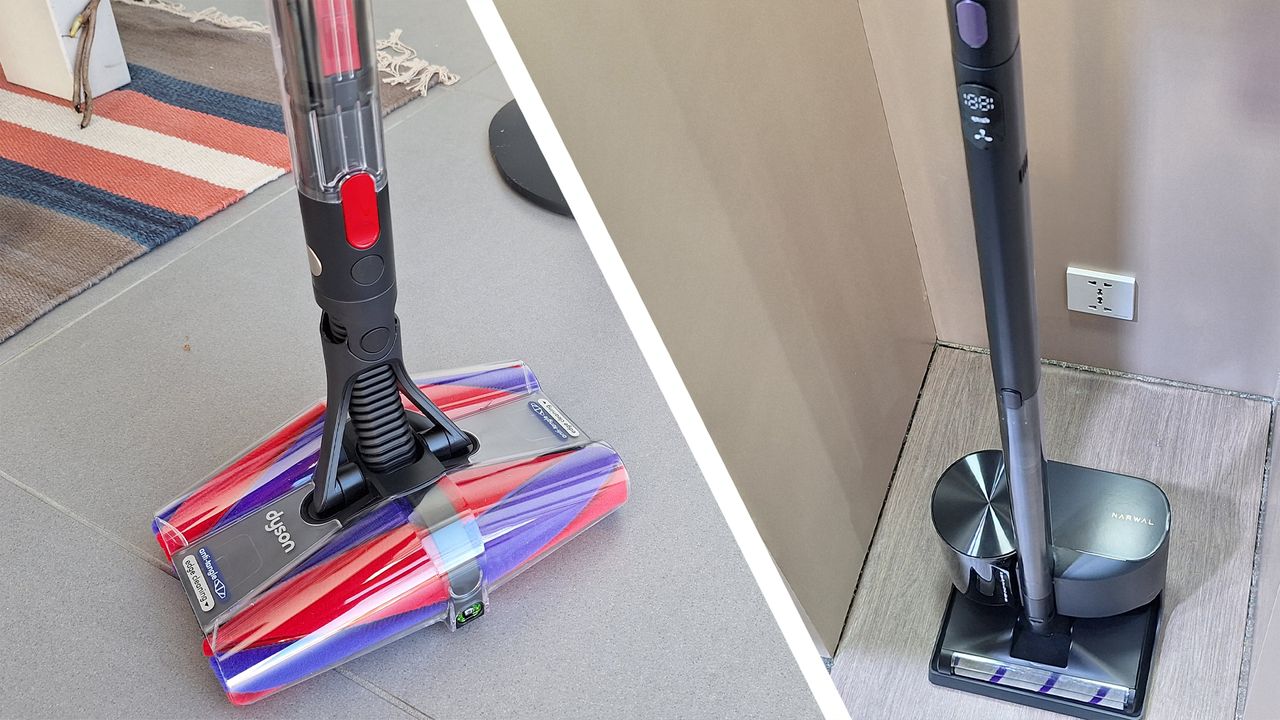
In terms of the design, the two look unmistakably similar – it's clear what Narwal based its design on. There's the same streamlined build, with mechanics squeezed into the handle; Narwal's handle is oblong rather than round, but otherwise it looks pretty much the same, with a Power switch, small info screen, battery at the top and dust cup at the bottom.
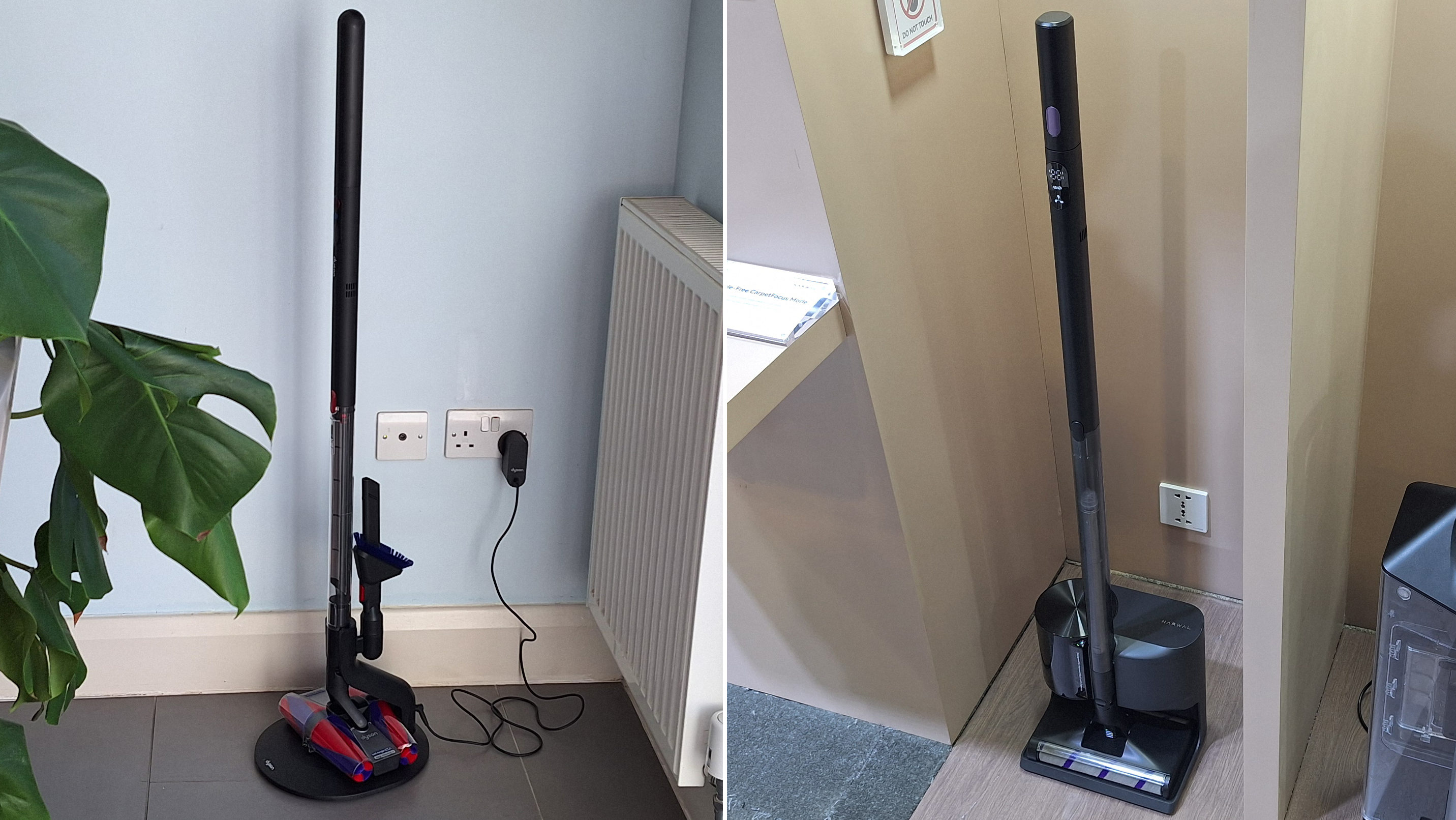
I wasn't able to pick it up, so I couldn't comment on the maneuverability or weight, but I will say the PencilVac excels in these areas, based on my tests so far. The Narwal version is described as having '360-degree swivel', and a brand rep told me its version would be lighter than the PencilVac, although no specs were supplied, so I'm hesitant to take that as given.
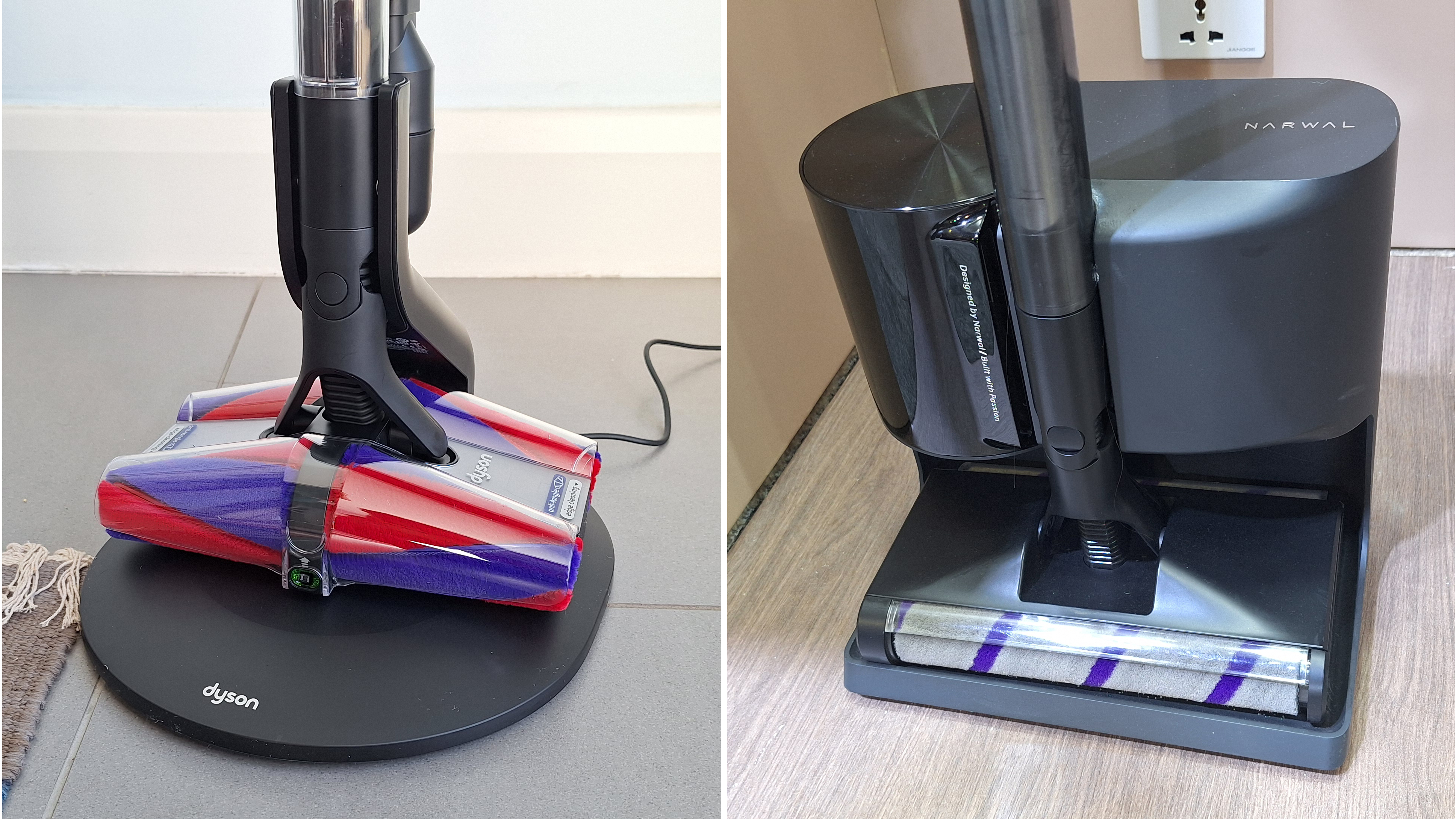
Dyson's PencilVac has an unusual floorhead, with soft, cone-shaped rollers designed to prevent hair wrap. Narwal's prototype version is more standard – the roller is still soft (which suggests this model, like Dyson's, is meant for hard floors rather than carpet) but it has just one parallel roller. Dyson has mounted dirt-illuminating lasers on both sides of its floorhead, and Narwal also mentions "a dirt-detection headlight" on its feature list.
Dyson deviations
One big area where Narwal has deviated from Dyson's design is in the inclusion of an auto-empty dock. This is essentially a base that houses a larger dust cup/bag, into which the vacuum's smaller onboard bin automatically empties when the vacuum is docked. These are becoming increasingly common on regular stick vacuums, and are even scheduled to be added to Dyson's lineup. However, there isn't one on the PencilVac.
An auto-empty dock is a logical addition, because the whole concept of this type of vacuum means there's not much room for a large dust cup. Dyson has included air-powered compression on its PencilVac dust cup to maximize the space, but there's still only 0.8L available – I have a shedding pet, and I find the dust cup fills up with hair rather quickly. An auto-empty dock, which takes the mess and effort out of emptying the bin, makes a lot of sense.
Other things that might well be causing Dyson some headaches are the listed specs for battery life and suction power. Narwal promises 140AW of suction on its dupe, compared to 55AW for the PencilVac. And while the PencilVac can manage up to 30 minutes of cleaning per charge, Narwal says its version will last either 50 minutes (as per the press release) or 45 (as per the specs displayed at CES). That's a significant difference in both cases.
Of course, the big caveat here is that the Narwal vacuum is still at prototype stage, so I won't be taking any of those specs as a given just yet – the inconsistency in runtime information is telling. While Narwal has brought out some very good robot vacuums, its report card is a little patchier than Dyson's, and for me it's not up there in terms of quality or reliability either.
That said, I'll still be watching with interest to see what happens when this interloper makes its way to market.
Follow TechRadar on Google News and add us as a preferred source to get our expert news, reviews, and opinion in your feeds. Make sure to click the Follow button!
And of course, you can also follow TechRadar on YouTube and TikTok for news, reviews, unboxings in video form, and get regular updates from us on WhatsApp too.
Source: TechRadar